

The PR Test of IWD 2026: Absa, KEPROBA and the Campaigns That Got It Right in Kenya

According to the 2025 Gender Gap Report by the World Economic Forum, only 68.8% of the gender gap has been closed, leaving a stark 31.2% still unresolved. It is against this backdrop that this year’s International Women’s Day (IWD) took on even greater significance.

This year’s edition – themed Give To Gain – demanded more than acknowledgment. It demanded positioning, commitment, and clear communication of action. It called for corporate organizations to show up not just as contributors to gender equality efforts, but as powerful storytellers of impact – translating internal action into public narratives that shape perception, influence behaviour, and inspire wider adoption.

The theme also sharpened stakeholder expectations. Customers, employees, investors, and regulators began interrogating every campaign with hard questions: what has been done, who has benefited, and what has changed?

In that environment, the usual purple creatives and symbolic gestures were not going to cut it.

It is with that lens that I reviewed campaigns across telecommunications, finance, government agencies, and everything in between.

Here are the top 3 that stood out the most:


1. Safaricom & M-Pesa Foundation – #WezeshaMama

Safaricom has clearly moved beyond the “inspiring video” era – and thank God for that!

#WezeshaMama was not a momentary hashtag campaign. It was a structured economic empowerment program targeting female micro-entrepreneurs with practical tools, digital skills, and business knowledge to help them operate and scale more effectively in an increasingly digital economy.

From a public relations standpoint, what stands out is the intentional alignment between action and narrative. The campaign was build for credibility – for sure. I noted that the storytelling came after the substance – and that sequencing matters.

Even more telling is the timing. The Moringa, launched nine months prior, was deliberately designed to culminate in March, creating a natural and authentic link to IWD. This is strategic communications at work – where milestones are not manufactured for the calendar, but the calendar is used to amplify real milestones.

Wow! 

The result is a campaign that answers the Give to Gain brief with clarity. The “give” is measurable: skills, tools, and access. The “gain” is equally evident: stronger businesses, improved livelihoods, and a ripple effect on the broader economy.

In PR terms, #WezeshaMama succeeds because it closes the gap between message and meaning. It does not just tell a story of empowerment – it demonstrates it.

Kudos to the PR guys at Safcom! 


2. ABSA Kenya – #WeSeeYou 

Absa Kenya did something many financial institutions are often hesitant to do – they named the problem.

For decades, women have been underserved and, in many cases, overlooked by formal financial systems. #WeSeeYou did not shy away from this reality. Instead, it confronted it directly, using real stories of women navigating – and often being limited by – traditional banking structures.

From a public relations perspective, this was a deliberate shift from safe messaging to courageous positioning. Rather than centering celebration alone, Absa anchored its campaign on validation. It acknowledged lived experiences that many women understand all too well but rarely see reflected by the very institutions meant to serve them.

That choice matters. In an era where audiences are increasingly skeptical of performative campaigns, authenticity becomes a differentiator. By recognizing the disparity and publicly committing to address it, Absa positioned itself not just as a service provider, but as a listening institution—one that understands both the emotional and structural dimensions of financial inclusion.

The strength of #WeSeeYou lies in its clarity of message. It did not attempt to overextend into grand promises. Instead, it focused on a simple but powerful PR outcome: building trust through acknowledgment.

And in doing so, it answered a critical stakeholder question – do you see the problem? – before attempting to solve it.

Don’t you wanna just start banking with them?


3. Kenya Export Promotion and Branding Agency – #MakeItKenya

Government agencies and creative campaigns rarely belong in the same sentence. KEPROBA challenged that assumption – and did so convincingly.

Their #MakeItKenya International Women’s Day edition was a deliberate reframing of women’s role within Kenya’s export economy. Through a visually engaging and message-driven reel, the agency spotlighted female exporters and positioned them at the center of the “Made in Kenya” brand on the global stage.

From a public relations perspective, the strength of this campaign lies in its clarity of intent and alignment with both national priorities and global IWD discourse. And leaning into the Rights. Justice. Action. Pillar expertly framed export participation as economic justice – shifting the narrative from inclusion as goodwill to inclusion as growth strategy.

What makes this particularly effective is how the communication translates policy into possibility. The campaign does not dwell on institutional messaging. Instead, it visualizes opportunity – making global trade feel accessible, attainable, and within reach for women-owned businesses.

This is a positioning win. In my books, KEPROBA has officially moved from being perceived as a government communicator to a market enabler. Within the Give to Gain lens, the “give” is strategic: platform, visibility, and pathways to global markets. The “gain” is even more compelling: a more competitive, inclusive, and export-ready economy.

Wapi makofi ya wangwana wa KEPBORA?


View this post on Instagram


A post shared by Make It Kenya (@makeitkenya)


The 3 examples will do.

In the course of this review, it was inevitable to come across a campaign that made me want to pull my hair out.

One government body – which I am certain is staffed with brilliant, high-achieving women – decided that their contribution to IWD would be a poster of… one of their male leaders. No female faces. Just the big boss, front and centre, establishing dominance.

Their audience of more than 800, 000 followers would have been forgiven for thinking they were looking at a parody account!


FELT Africa Has You Covered

Didn’t quite nail your IWD campaign? There’s more to come, and we have you covered!

FELT Africa works with organizations to move beyond surface-level communication and into narratives that are credible, strategic, and results-driven. From campaign ideation to execution and amplification, we help brands say the right things, at the right time, in the right way—and most importantly, back those messages with substance.

Talk to us today.

World Radio Day 2026 | Radio, AI, and the Future of Trust

In the first Politikali Konekted Podcast episode of 2026, Diana Ngao and Chaka Sichangi spent precious airtime trying to convince Kenyans that this year is not really 2026; it is pre-2027! But the truth is, no one needed convincing.


Election politics is already everywhere. It fills our timelines, our conversations, our anxieties. And more than anywhere else, it dominates radio.

Radio is the voice people trust when politics are tense, when rumours spread, and when clarity matters most. Because radio waits for no man; speaking in real time into homes, matatus, shambas, marketplaces and everywhere you can think of.

That is why the 2026 World Radio Day theme – “Radio and Artificial Intelligence: Innovation that Empowers, Ethics that Inspire, Trust that Endures” – could not be more urgent.

Artificial intelligence is no longer knocking at the newsroom door. It is already inside. It is shaping how content is sourced, produced, verified, and amplified. For radio, a medium built on voice and immediacy, AI’s arrival is both an opportunity and a tricky test.


The New Reality for Radio in Politically Divisive Times

Today’s broadcast journalist works under extraordinary pressure as political temperatures are high, audiences are impatient and live microphones leave no room for hesitation. Every word is instantly public, permanent, and contestable.

AI intensifies this reality. Synthetic audio can sound authoritative. Automated tools can accelerate production. Algorithms reward speed and outrage over restraint and verification. In this environment, the boundaries between reporting, commentary, and opinion are under constant assault.

And so here we are – at a moment when artificial intelligence is no longer just about innovation, but about institutional risk, legal exposure, and public trust.

The questions are no longer theoretical. The implications are no longer abstract. And the examples are already playing out.


When AI Is Used Wrongly: How Audio Authority Can Become a Weapon

In March 2024, a stark warning emerged from Sudan.

An account belonging to a TV and radio presenter shared an audio recording attributed to the head of the Sudanese Armed Forces. The recording appeared to issue chilling orders: the killing of civilians, the deployment of snipers, the seizure of buildings.

The clip went viral; being viewed more than 230,000 times and reshared by hundreds of users, including senior political figures. It was from a popular radio presenter, after all. The is no way it could have been fake, right? Wrong!

The audio was later confirmed to be AI-generated. But that was long after the damage was already done. We all know what is going on up there.

This is the danger AI poses to radio in political crises. Audio bypasses scepticism. It feels immediate. It feels intimate. And you could swear to God that it is real.

The example is unsettling, yes. But the next one is going to warm your heart.


When AI Is Used Rightly: Strengthening Accountability on Air

When AI is not being used to spark war through radio, it can actually be an incredible tool.

Enter Dubawa, an AI-powered tool built that supports journalistic accountability. The chatbot enables real-time fact-checking, assisting journalists and audiences to interrogate claims as they arise. 

More powerfully for radio, Dubawa launched an AI audio platform that can monitor radio programmes, transcribe live broadcasts, and extract verifiable claims. 

This solves one of radio’s most persistent challenges. Live radio is influential, but often undocumented. Claims made on air can run around the world before a retraction wears shoes. Dubawa’s approach restores memory, accountability, and evidence – without replacing editorial judgment.

It is at this point that we all put our hands together and give it up for the good people at the Centre for Journalism Innovation and Development, who came up with this innovation.


Why Professional Judgment Matters More Than Ever

All said and done, AI does not absolve journalists of responsibility. Legal awareness, ethical restraint, and clarity under pressure remain core broadcast competencies. They cannot be automated. They cannot be outsourced. They must be trained.

And that’s where FELT Africa comes in. We recently completed our Professional Standards Training for Broadcast Journalists and Media Practitioners in Eldoret. Our training supports journalists, editors, and media institutions as they navigate high-pressure, politically charged environments. It strengthens professional conduct, legal awareness, ethical decision-making, and the ability to distinguish journalism from advocacy – especially when technology blurs the lines.


Increasingly, journalists themselves are asking for this guidance. During our recent training in Eldoret, Chaka Sichangi, a director at FELT Africa and an Advocate of the High Court – no less – fielded urgent questions on AI tools, verification, and ethical boundaries throughout his sessions.


A Call to Protect the Future of Radio

As we commemorate World Radio Day 2026, one truth is clear: radio’s future as a voice of truth will depend on media houses, regulators, and government institutions investing in training for this new reality. 

FELT Africa partners with media organisations and regulators on research, curriculum development, and professional standards training fit for an AI-driven media landscape. We also invite development institutions and donors to engage with us in building programs that protect the integrity of public discourse.

Innovation can empower. Ethics can inspire. Trust can endure. But only if we work together.

A Crisis Communications Audit of the East Africa Ocean Festival Boat Accident in Mombasa 

(Trigger warning: this article references a fatal incident)

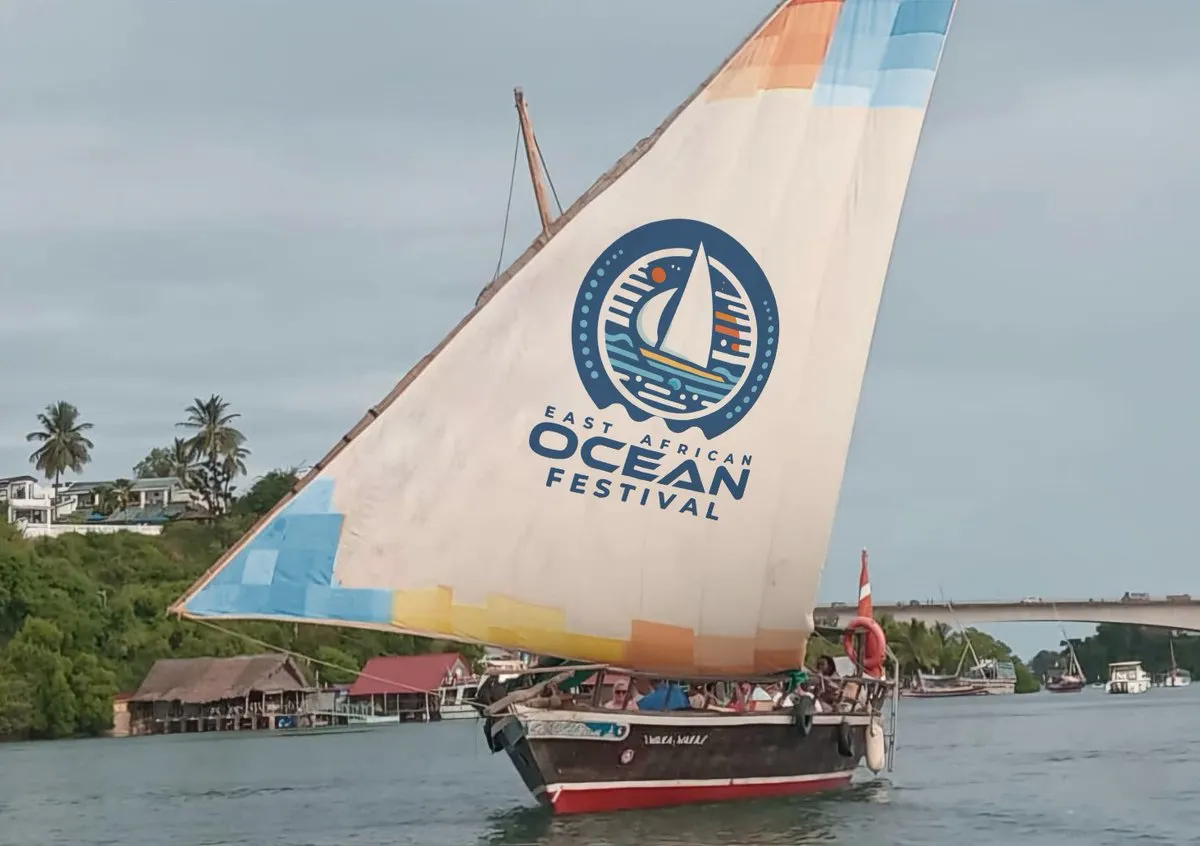
On Friday, 10th October, tragedy struck during the East Africa Ocean Festival in Tudor Creek, Mombasa.

A dragon boat carrying 22 participants capsized in the Indian Ocean. 19 were rescued, some requiring resuscitation, while three remained missing. By Sunday, the media reported one body had been recovered.

As I write this, I extend my condolences to the families affected by this incident.

The 30-second video circulating widely on social media showed two boats racing closely before one suddenly overturned. What was equally alarming was the apparent lack of an immediate emergency response from nearby onlookers and event officials.

In the hours that followed, the story dominated local media. Organizers issued statements, government officials gave remarks, and families expressed both grief and disappointment.

Beyond the heartbreak, this tragedy exposes serious weaknesses in Kenya’s crisis preparedness and communication culture, especially in high-risk public events.

This analysis is about accountability and learning, not blame.

When lives are lost, communication is not just a protocol; it becomes a lifeline.


Lesson 1: Crisis Preparedness Begins Before the Event

Every event must start with the safety of participants at its core.

The organizers’ initial statement, released late Friday night, acknowledged the accident and mentioned that “the safety of our participants remains our highest priority.”

A follow-up statement two days later listed safety measures, risk frameworks, and rescue coordination efforts – clearly an attempt to reassure the public. However, eyewitness accounts and circulating footage suggested that participants on the capsized boat were not wearing life jackets.


Without a transparent and verifiable safety protocol, the credibility of any communication quickly erodes.

Crisis preparedness begins long before the crisis – through risk assessments, emergency simulations, and coordination with first responders. Once public doubt emerges, organizations move into a defensive posture and lose trust rapidly.


Lesson 2: Accountability Is Stronger Than Defence

The first hour after a crisis defines public trust.

In this case, the organizers’ first statement was released around 10 PM, hours after the incident. During that gap, media speculation and public rumour filled the vacuum.

A Crisis Communication Protocol (anchored in the CERC model) emphasizes timely, factual, and empathetic messaging. Tell it All, Tell it Fast, Tell it Often. Regular, transparent updates – even short ones – reassure both the public and affected families.

In their later statement, references to safety manuals and procedures appeared defensive. A more effective approach would have been to say:

“We are reviewing safety compliance records with relevant authorities to understand any procedural lapses.”

This phrasing conveys ownership rather than denial, and earns public empathy even amid tragedy.


Lesson 3: Lead with Humanity

In crises involving loss of life, people seek human presence, not corporate posture.

Empathy must come first, not as the closing paragraph of a press release.

The East Africa Ocean Festival would have benefited from appointing a visible spokesperson – someone seen comforting families, giving live updates, and embodying the organization’s compassion.

To their credit, Jomvu MP Bady Twalib, the Governor of Mombasa, and the Deputy President of Kenya were all visibly present and offered reassurance. Their engagement demonstrated what it means to communicate with humanity during tragedy.

In crisis communication, people don’t remember your logistics – they remember your humanity.


Closing Reflection

The East Africa Ocean Festival tragedy is a sobering reminder that safety, communication, and accountability are inseparable.

Kenya’s growing events and tourism sectors must embed crisis preparedness as a standard practice – not an afterthought.

In the next part of this audit, I will examine how local authorities communicated during and after the incident, and how public institutions and PROs can collaborate to develop a national Crisis Communication Framework for Event Safety in Kenya.